


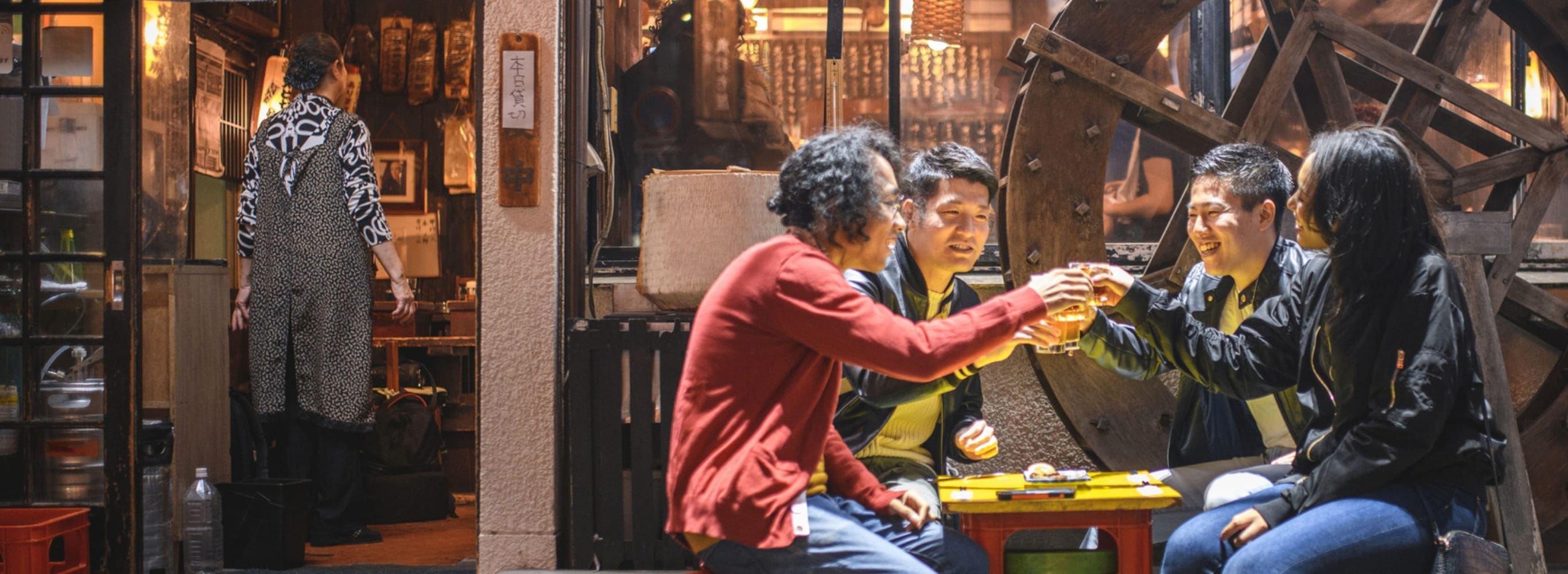
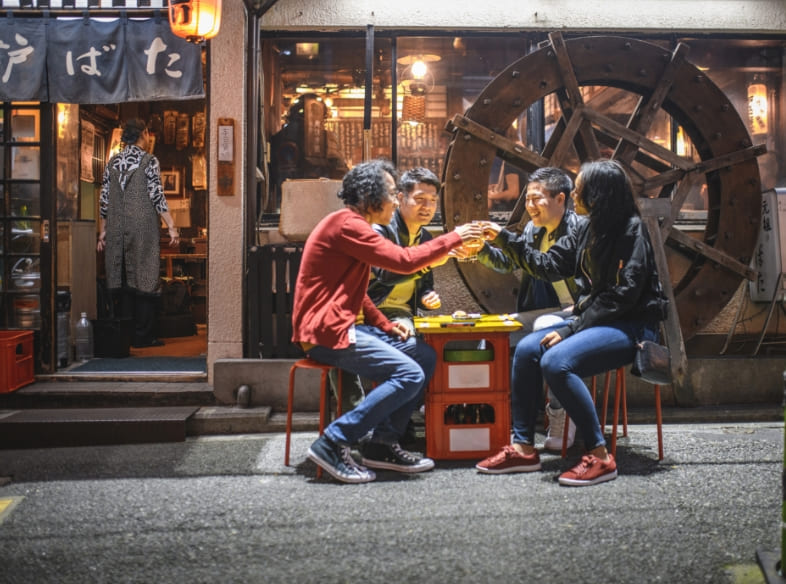
Neon-lit streets, hidden bars, back-alley izakayas illuminated by traditional lanterns—in Tokyo at night, adventures await behind every corner. Blending in with the locals is often the best way to enjoy the city’s after-dark scene to the fullest. Here are a few pointers that’ll help you overcome communication hurdles and make your night out in Tokyo all the more memorable.
Start with “sumimasen”
The word “sumimasen” (“excuse me” or “sorry”) is often thought of merely as an apology, but it’s actually one of the most versatile phrases in the Japanese language. It’s also one you’ll hear constantly in everyday situations in Tokyo.
For example, “sumimasen” works wonders when you’re trying to attract the attention of the staff when entering a shop, restaurant, or bar. The word serves as a greeting, too, putting your counterpart at ease before you start a conversation. You can also use “sumimasen” when calling on staff to place an order.
“Sumimasen” helps you gather the attention of those around you if you get lost, and serves as a gentle nudge when you’re trying to move through a crowd.
In addition, “sumimasen” is sometimes used to express gratitude for small acts of kindness. It’s a supremely useful word that opens doors, is met with smiles, and eases communication wherever you go in Tokyo.

And that’s an order
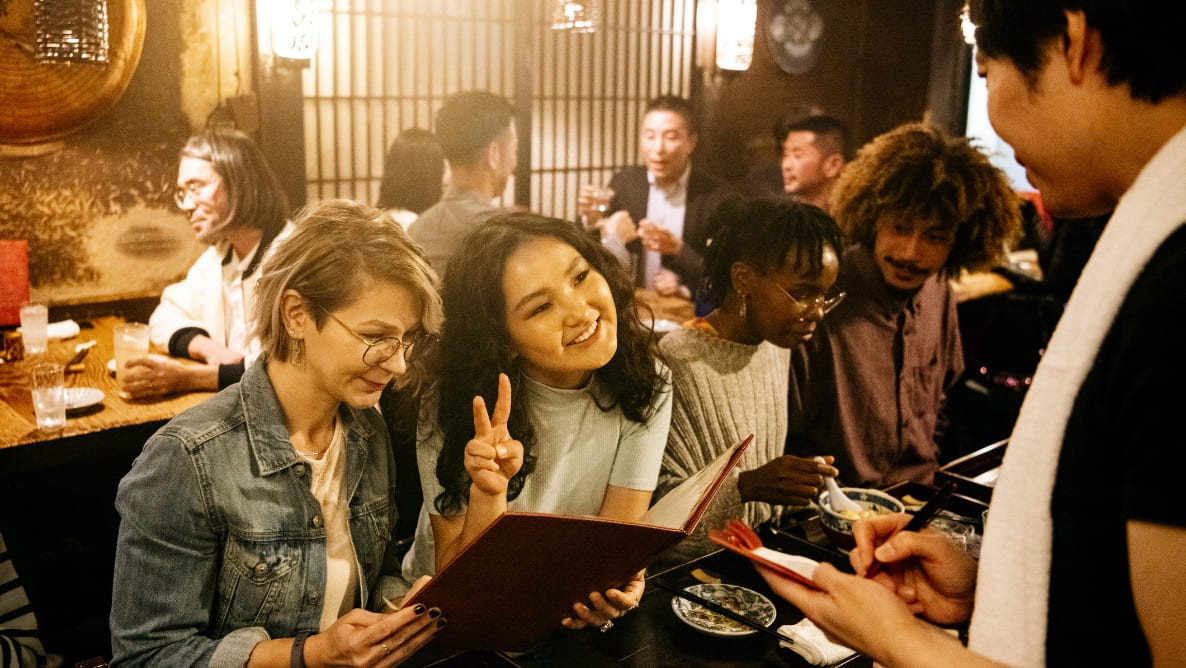
Restaurant menus with photos are a common sight in Tokyo, especially in areas that attract many international visitors, and multilingual menus are becoming more common too. At establishments with these types of menus, ordering usually requires only a “sumimasen” to get the attention of the staff, followed by a few quick motions to the right items on the menu.
In recent years, more and more restaurants have started taking orders via tablet or phone, sometimes offering multilingual interfaces as well. Ordering is becoming less and less of a chore, and the language barrier is slowly but surely being broken down.
At restaurants that offer their menu only in Japanese, plenty of customers now order with the help of translation apps or by showing photos of the dishes they’d like. The fact that many establishments allow you to enjoy a meal smoothly like this, without the need to engage in pleasantries with staff, highlights Tokyo’s distinctive blend of efficiency and consideration. This is a city where people will usually do their best to accommodate you even if you don’t speak their language.
Master the art of “kanpai”
While eateries and drinking dens populated mostly by regulars might seem intimidating at first glance, people at these local spots are often more than happy to welcome visitors from overseas. Regulars proficient in English or another foreign language will sometimes step in to explain the menu or assist in place of the staff.
Tokyo’s bars are filled with friendly locals, but it’s not uncommon for patrons to be reserved about striking up conversation with strangers. Don’t mistake this for insensitivity, though; it’s a cultural trait that reflects respect for personal space.
That’s why, after ordering your drink, try clinking glasses with your neighbor and saying “kanpai” (“cheers”) before taking your first sip. This small gesture is often the key that unlocks the door to a spontaneous conversation.
While Tokyo has people of all personalities, and the general vibe varies by place and age group, “kanpai” has the power to draw people closer in any setting. Just don’t shout the magic word too loudly, please.
